Plastic Brain

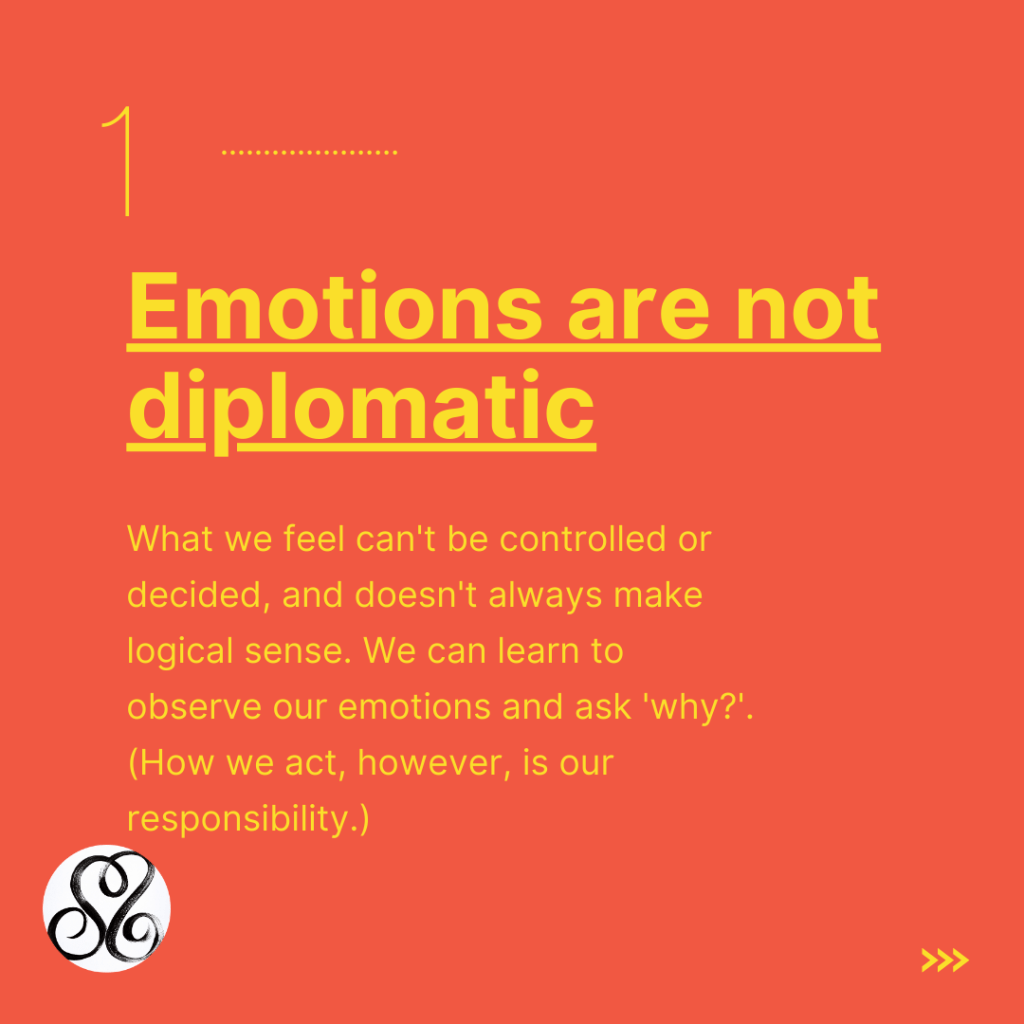
Our brain is a complex machine, an incredibly smart one that tries to maximise our quality of life, by making us more adaptive, learning from our mistakes and mastering the skills we use the most.⁣⁣
‘Plasticity’ refers to the ability of transforming itself according to needs, whether they are ours or our environment’s. Our brain is at its most plastic during our development, where new information and skills can – more – easily be learned. ⁣⁣

Does this mean plasticity is a good thing? No. ⁣⁣
Is it a bad thing? Neither.⁣⁣

Let’s try to understand why. If our brain changes in relation to circumstances, the way it changes will depend on the circumstances. ⁣
If it experiences a lot of stress, it will readily implement an emergency system that will make us alert most of the time, to prepare for the adversities we are experiencing. (If a child is psychologically or physically abused on a daily basis, their brain will prepare for it, trading the ability to self-soothe with the one of noticing signals of danger, for example).⁣⁣
“Being less responsive to environmental change” means, in a situation like this, undergoing constant danger without the means to handle it. ⁣
The same characteristic that makes some people more “vulnerable” to turn traumatic events into depression, is also the one that facilitates them when a change occurs around them. Those same people that develop an emergency system more easily (thus being more anxious) are also the ones who benefit more from a positive upbringing.⁣⁣

So, we could call resilient those who resist the adversities around them without being irreversibly affected by them, while they are also the ones who will introject less of the positive elements in their life.⁣⁣
We happen to live in an era where resisting is considered more functional than integrating, but let’s not get fooled: we need both!⁣⁣

(The facts I have summarised above are a simplified version of what we study in psychobiology books, there are many more nuances to this, and these differences are not rigid ones, plasticity can be improved and resilience too.)⁣⁣

Resilience vs. Recovery

Resilience vs. Recovery ⁣

We can all agree that dip might look scary, when compared to an amazingly unaffected straight line. ⁣
When experiencing – or even expecting – a trauma, or a struggle of any kind and degree, we can feel as if losing our own grip on reality. We can face apathy, despair, a detachment from meaning. We can feel we are losing ground from under our feet and urge to rush back to normal. To bounce back.⁣

As we saw, most of us experience this at least once in their life. The dip, not the bounce. ⁣
When the pandemic started, many people started to talk about “going back to normal”, and just as many replied “we should not go back to normal, because normal was the problem”.⁣

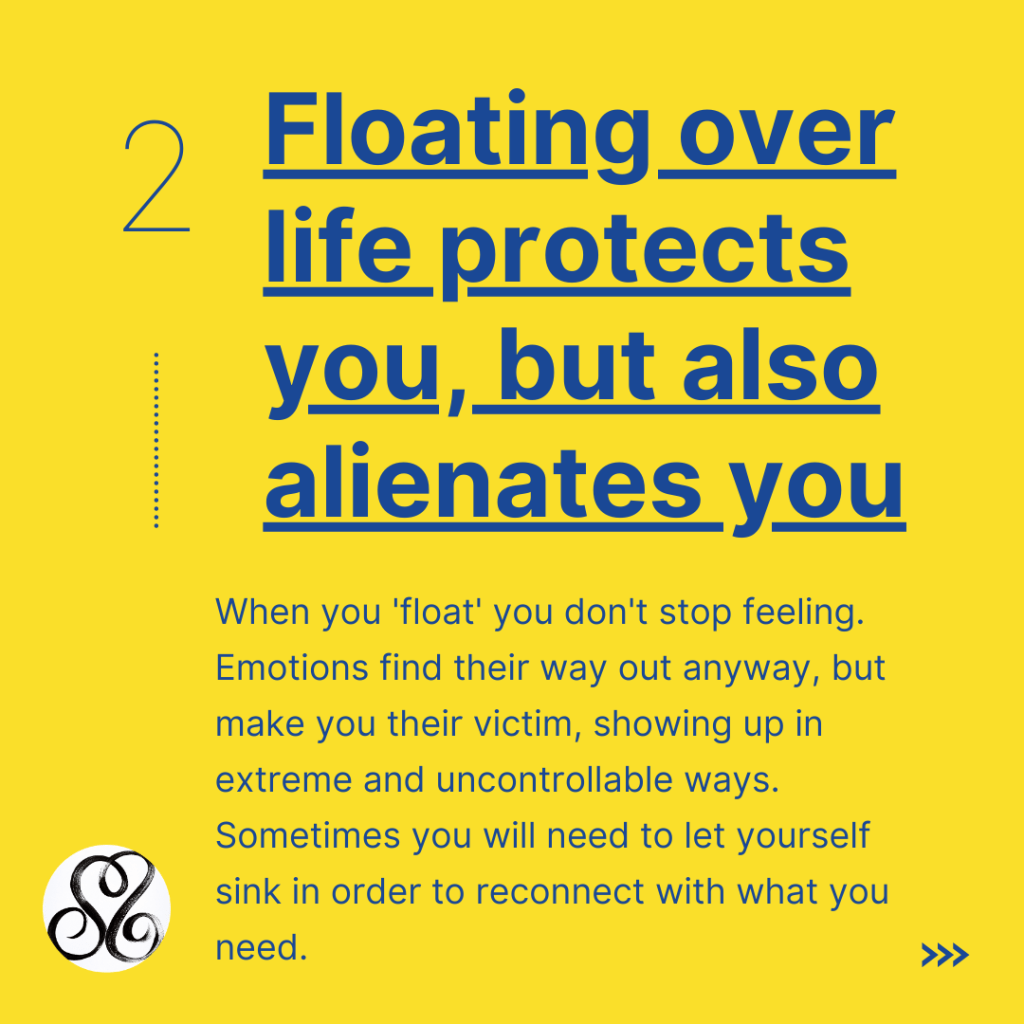
Here’s the hard truth: only the dip allows revolutions (of the Self, of society, of values). The straight line is an appealing alternative, sure, but as a default reaction, doesn’t it remind you of robots? ⁣
Desperation might make us want to feel like robots at time, impassible and unbreakable, but when the sun starts shining again we might want to face another hard truth: if the bad doesn’t touch us, the good won’t either. ⁣
There’s a price in experiencing emotions, and there is one in floating. ⁣
Sometimes we need to resist.⁣
Sometimes we need to change.⁣

Can we be resilient at all times? Nope.⁣
Can we sink at any trauma? Nope.⁣
Should we find a balance? Yup.⁣

(As usual, let’s leave over-simplifications out of mental health.)⁣

Resilience: multi-dimensional

According to a study from Lopez and Snyder (2009) our ability to be resilient derives from a good parenting style: the authoritative one, characterised by “qualities of warmth and affection that also provide structure and support to the child”. So, as often happens, a good attachment – and good relationships in general – seems to be a condition for being adaptive human beings. ⁣

But let’s first make a distinction. Resilience is often mistakingly assumed to be a trait of the individual, while in fact It’s a process. One of acceptance, meaning, adaptation. ⁣

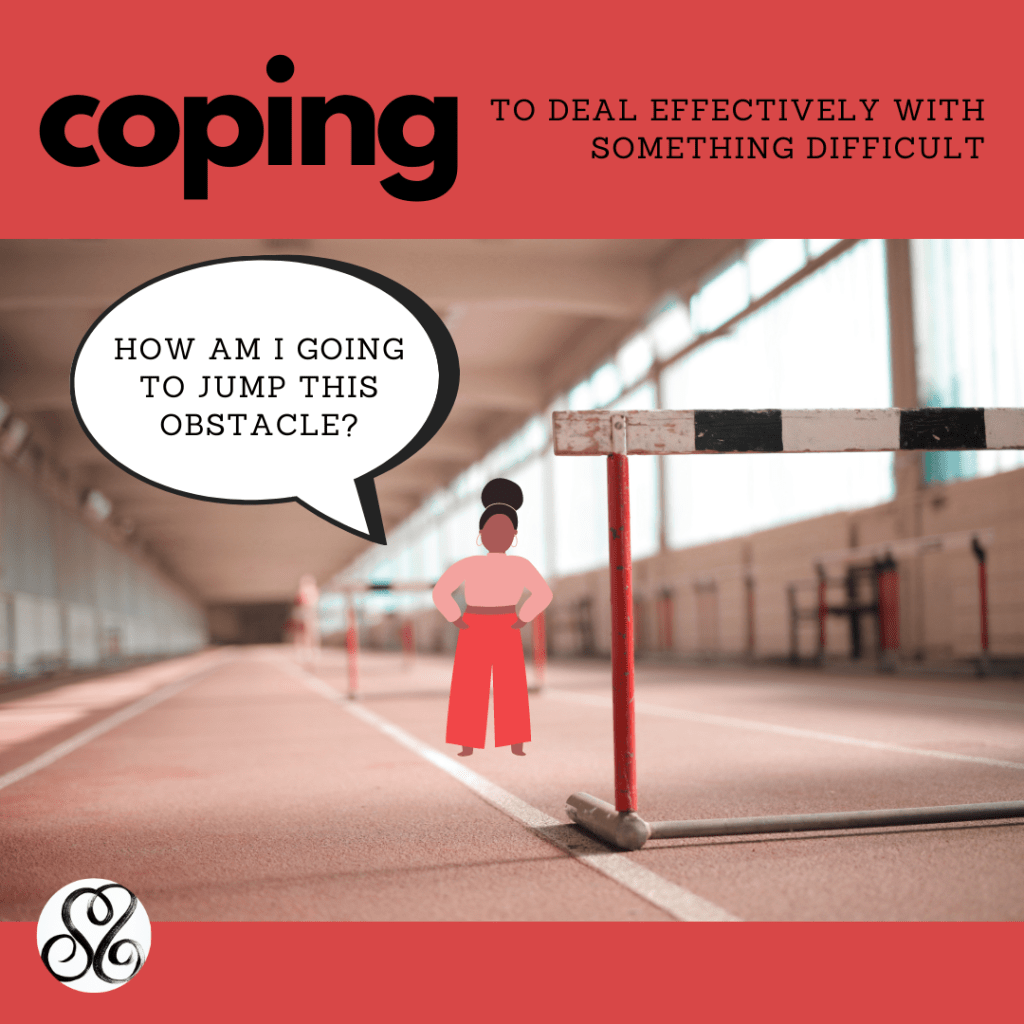
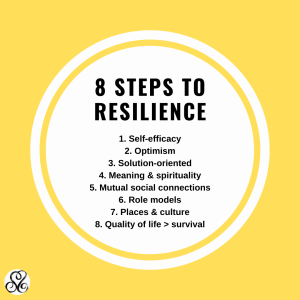
It’s a multi-dimensional construct that includes life satisfaction, negative or positive emotions, general health and physical health. It is not simply the ability to cope: it’s an all-encompassing concept that requires awareness and acceptance at many levels. When considering just one of them, a high percentage of the population seems to have some resilient traits (19-66%) but only a very small percentage of us is all-round resilient (Infurna & Luthar, 2016). Precisely, 8%. The majority of us actually experiences ‘recovery’: a dip in functioning and a gradual improvement. ⁣

This shows us that together with this increased use and promotion of resilience, there grew also an over-attribution of resilience where in fact it is not as common to ‘bounce back’. And, most importantly, it is something that can be learned. ⁣

It is the result of a multitude of little things, of a state of tranquillity, acceptance of one’s own limits and expectations and life as a complex machine.⁣

So when you see all these shortcuts to resilience, be skeptical: resilience is a goal, a guideline, not something along the lines of ‘fake it until you make it’. ⁣

While recovery should be normalised, in honour of being human and vulnerable, resilience can be assumed as a direction to always move towards. Something we work every day to balance with our own, personal need for vulnerability.

November theme: Resilience

Here comes our November theme: #RESILIENCE.⁣

The word ‘resilience’ is increasingly (mis)used. ⁣
Originally, it was defined as the mechanical attribute of an object of⁣ “resuming an original shape or position after compression or bending”, and it has been brought to the psychology world with figuratively the same meaning: the ability to “bounce back”, to be unaffected (or mildly affected) by the difficult circumstances that could happen around us.⁣
It’s a quality that helps us face challenges without being overwhelmed by them, keep a positive attitude in the face of struggles and extrapolate a meaning from tragedies. ⁣
So, it’s a great thing right?⁣

Not so fast.⁣

Resilience is, like many other skills, an useful tool that has unfortunately become a simplified slogan. We live in an era of quick solutions and quick emotions, where there’s little time and problems have to be given just enough to be moved aside. It’s a time that favours simplifications and black&white views, because they require less reflection. So, resilience and many other words have been transformed into mantras, taken in their totality and not questioned.⁣

Is it really desirable to ‘bounce back’ from everything? Where do we draw the line between being immune and favouring contamination?⁣

We will have this whole month to reflect on this, Stay tuned!⁣

Denial of our time

Today, we talk about denial.⁣

Very similar to repression, it also works by excluding unacceptable thoughts and feelings, but goes further in actively denying them.⁣

“It’s not as bad as it seems” so the event and its consequent emotion are belittled, and assume a different connotation.⁣

A very relevant example is the denial many of us experience towards the climate crisis. It is a natural reaction to something as umbearable and huge as the environment degradation, and, as any other defense mechanism, is there to protect our psyche.⁣

It’s important to give it attention because what is good for our psyche is not always good for our wellbeing, for our community and for society.⁣

Denial of this state, and the micro-denials that come with it, lead to inaction.⁣

“It’s not as bad as they are portraying it”, “It will be alright” and “There is nothing I can do that will make a difference” are all forms of denial. Optimistc, naive or pessimistic, the goal is always removing something from our sphere of control.⁣

Embracing that control means also embracing a certain degree of powerlessness. This is the complexity we need to progress, and this is why the simplicity of denial can be so effective sometimes.⁣

[Read the article of the Guardian]

Eulogy of the unconscious – Part 6

The series comes to an end, and together with the last two arguments we also delineate some important take-home messages of the whole book.

First, we go back to the statement “It’s better to enjoy than to live”, trying to explore how the desire has in it a dark part that feeds not on wellbeing but on throwing away. For this purpose we look at a game played by Freud’s grandson, interpreted by several psychoanalysts in a different way.

Then, in the last point we make a tribute to ignorance, namely the disposition of not knowing that we should have while discussing with others, but also the attitude expected from a psychoanalyst when listening to his/her patients. Doubt over certainties, questions over expectations.

Lastly, we go through nine points that made this book inspiring for me, and that I embrace in my profession as a psychologist.

A final reflection on ambivalence

It’s almost the end of our ambivalence month.

We talked, up until now, about the ambivalence that constitutes our roots, the coexistence of opposing realities that can find a space to live together, to keep confronting each other.

But some ambivalences are much more urgent. Choosing between two jobs, deciding whether to stop smoking, having or not having children… When these ambivalences are resolved, there is a reduction that needs to be made.

From a multiplicity of choices, and therefore Selfs, to one road: the one we decided to walk on.

After long debates with ourselves, we make up our mind and choose one version of life, one version of ourselves, while giving up all the alternatives at once.

In the indecision lies the everything; with resolution comes the limit.

So, while on the verge of a decision that urges to be made, we bask in the illusion of everything, and with it we feel an all-embracing omnipotence.

And we promise ourselves that an ideal solution will follow this doubt. We are convinced that the perfect answer will come to us.

While we distract ourselves with distant rewards, the choice becomes a necessary and idealised destination. In our mind, this doubt, that makes us feel crippled but infinite, will leave room for absolute clarity.

But.

Sometimes, when it’s protracted for very long, with no signs of resolution, we could ask ourselves if perhaps this ambivalence is a shield from the first one.

I don’t choose a job because that would mean that I might have to come to terms with the fact that my choice holds in it both good and bad aspects, and that the perfect decision I was aiming at, was never really attainable.

Or

The two people I love are both great and indispensable in my mind, because the reality that comes after choosing either one might reveal their bare humanity.

Instead than facing the scary and complex reality behind every choice, I am stuck on the choices.

So, in a world of confusion where some ambivalences can never be overcome, and some others lead to more ambivalence, what keeps us grounded is holding the ambivalence inside of us.

Once we understand that its scariest aspects are also what makes life tremendously precious, every choice might seem less final. Every alternative won’t represent the hopes we forcedly dressed it with, but an imperfect, complex responsibility that will require our care and energy and will be worth it sometimes while not others.

Once ambivalence becomes an ascertained part of our life, no choice will seem perfect, but all will seem valid.

In writing this reflection, I was inspired by the enlightening points made by: http://www.afterpsychotherapy.com/ambivalence/ 

Eulogy of the unconscious – Part 5

Today, we explore what it means to adhere to the reality principle, seeing some common solutions of cognitive therapies, and highlighting the stance of psychodynamic ones. This difference helps us understand the theories behind these two approaches, and how they focus, respectively, on normality and uniqueness as a starting point for helping the patient.

Then, we enter the most controversial territory of psychoanalysis: the death drive. Is there a force in every person that together with the desire, that pushes him/her forward towards progress and creation, acts as a conservative force, sucking back the individual? Or, as Freud calls it, is there ‘an urge in organic life to restore an earlier state of things‘?

Replace ‘but’ with ‘and’

For M. Klein, being able to feel ambivalent towards someone – or something – was an incredible accomplishment and sign of psychological maturity.

The child starts learning about ambivalence during what she calls the ‘depressive position’. Very simply explained, it’s the moment where the child starts peaking into the complexity of human nature. This fills him/her with melancholy and impotence. Before then, the infantile world was pervaded by ‘good’ and ‘bad’ things. The good breast that feeds me, and the bad breast that doesn’t.

There is a moral ambiguity the child has to come to terms with: almost nothing is utterly good or bad. The same breast – parent – that feeds me, loves me, protects me, is also the one that can turn away, be absent, punish me.

O. Kernberg drew upon this theory when he defined a borderline personality: someone who has not overcome the stage of differentiation, and perceives extreme, irreconcilable emotions towards the same person.

‘Healing’ from this black and white view, bringing opposites to integration and coexistence is something that takes time, and is often the goal of counseling itself. But we can still do something small, everyday, to practice ambivalence.

Let’s try to substitute BUT with AND.

I’ll start:

“I can be tough, and I am lovable”.

Eulogy of the unconscious – Part 4

Are we condemned to never overcome our earliest experiences? Did we already form our identity in our first years of life, and everything that came afterwards is just an attempt to make sense of it? Or perhaps, memory is a process in itself. While we remember, we create. The first part leads us through the similarities between memory and art.

In the second part, we explore the role of the analyst in the therapeutic process, and the meaning of being ‘cured’ within this process. If there isn’t an ideal Self or a desirable outcome, how can we measure the success of therapy?