Repetition and expectations in relationships

Sometimes we might find our current relationship to be oddly similar to a previous one. The people we are dating are different, but some dynamics keep coming up.

Why is it so common to repeat patterns in our relationships?

Attachment theory gives some important answers to this question. 

Since our birth, we start engaging in interactions with the most important figures of our childhood: our parents/caregivers.

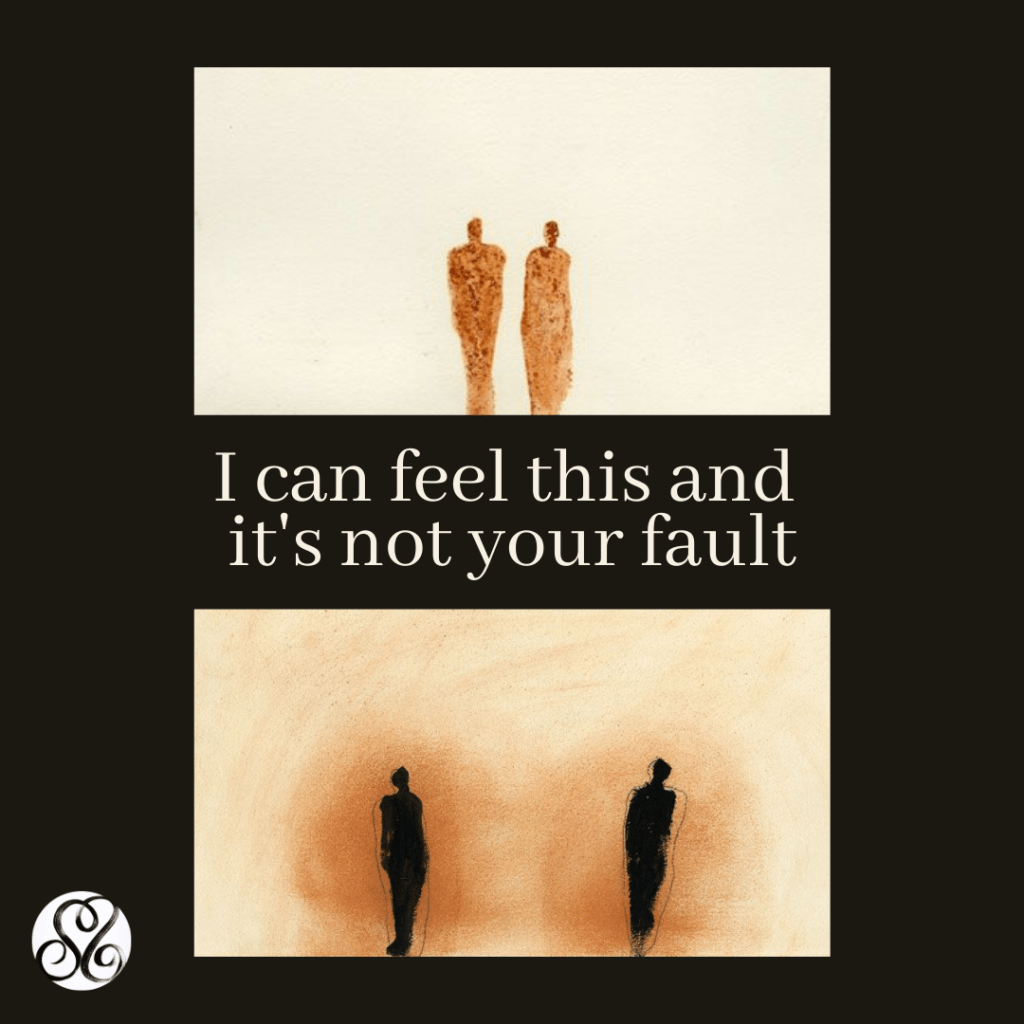
Whoever is closest to us in those years teaches us something important (although not permanent) about two things: what to expect from others, and how lovable we are, in relation to what others express towards us.

These years have a strong weight on our later patterns because it’s where we are the most vulnerable we will ever be: we need protection, we need to acquire all our skills, and also need to learn how to feel autonomous and connected.

So the way our caregiver behaves determines our future expectations, and if they don’t become conscious, also a repetition of the same dynamics within our relationships with others.

If whoever takes care of us is available and supportive, we will learn that the world is generally a place worth exploring, populated by well-intentioned people, and that we are valued.

If this safety and availability is not there, or is unreliable, we will have doubts about others’ intentions, our own safety and value.

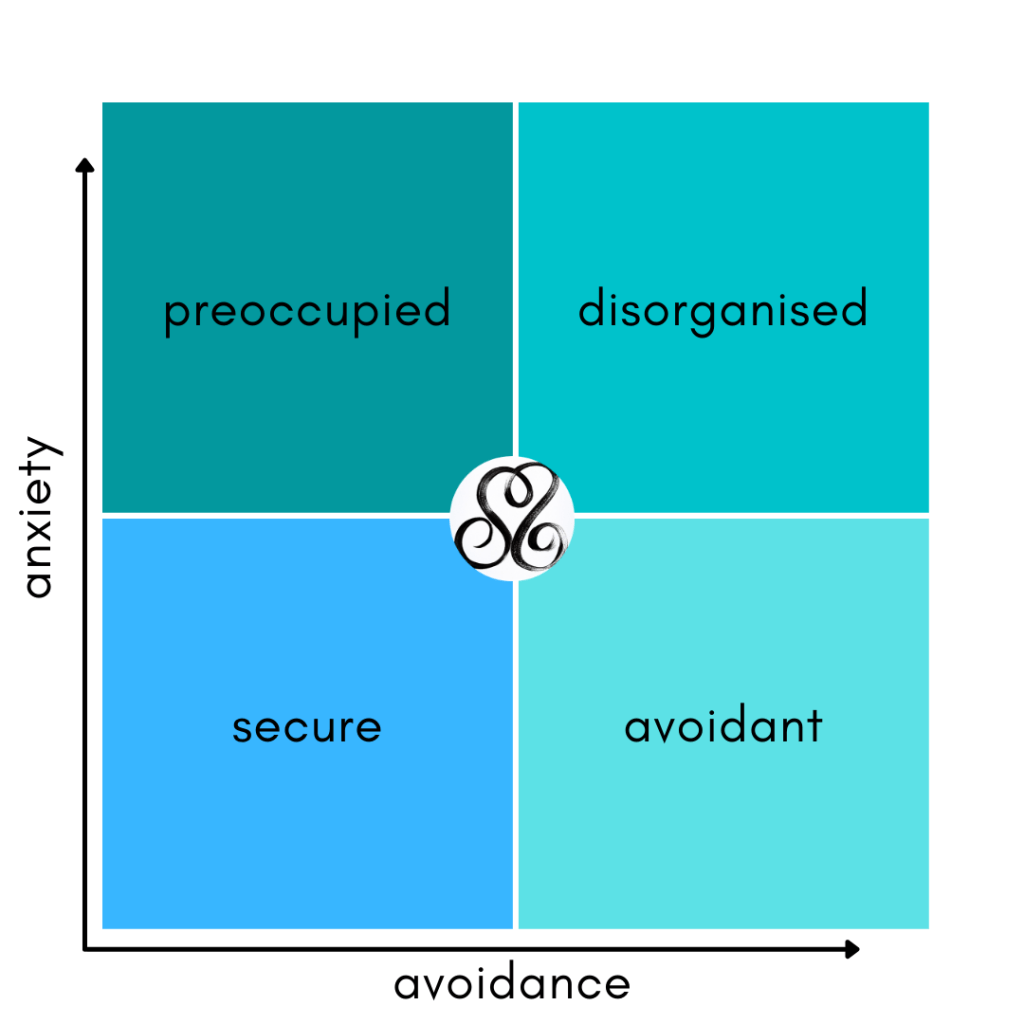
The unreliability often leads to a mix of anxiety and anger: vigilant and energetic requests for closeness are sometimes rewarded and therefore assumed as the right way of interaction. “Pay attention to me” seems to scream the child who is unreliably offered closeness and support. As a consequence, there is an exaggerated appraisal of danger, a constant over-activation, a disproportionate demand for attention.

The straightforward unavailability, on the other hand, leads more often to a down-regulation of the system: nothing is really worth seeking support, because frustration is expected as a result and that needs to be avoided. The goal of closeness is never attained, and this fosters a compulsive self-reliance: “I will suppress my needs because no one cares”. These needs are dismissed, and closeness is avoided.

Is this an equation? Of course not. As usual, theories are not there to be used as manuals.

This is an important one that tells us mostly two things: we learn to expect from others what we have experienced in the past (it is simply more functional for our brain to do so) and from this we derive our own sense of worthiness.

Can we do something to stop the cycle? Always. Awareness is there exactly for this reason: use understanding to stop repetition.

How do we relate?

Relationships: the place where some of the biggest issues of life lie.

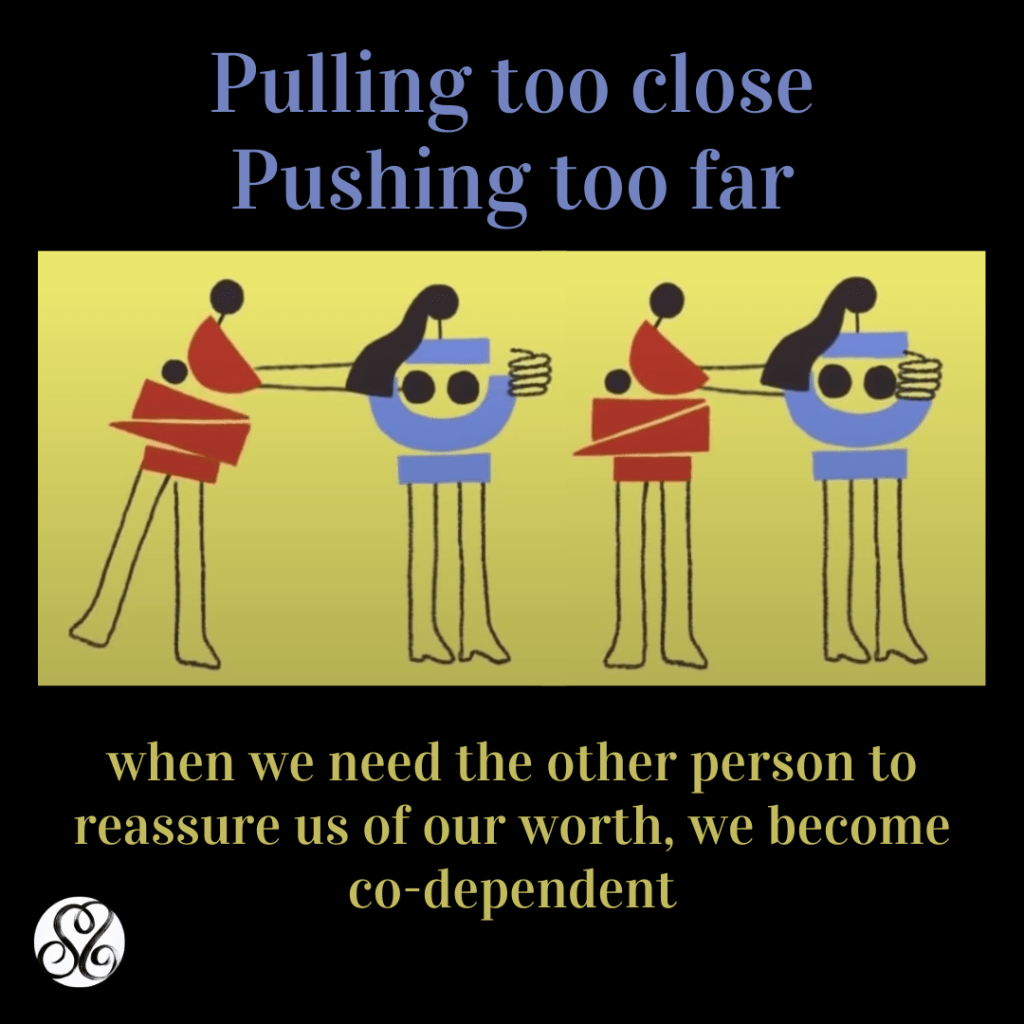
How to relate to others, how to be independent from others, how to give them the right space in our life, how to avoid making them our coping strategy, how to detach the image we have of ourselves from the one others have of us (assuming that we can ever know what that is), how to distinguish love from need, from symbiosis, from dependency, how to grow with relationships instead than making them an excuse to stay the same, how to feel strong and in control when that is often not attainable in relationships that engage us emotionally, how to find the right amount of vulnerability and closeness, how to stay true to ourselves while accepting not everybody – or worse, the person we love – might like that person, how to see the other person as he or she really is, even when that is harder to accept, how to undress others, as much as possible, of our projections, how to become better at how we relate to them.

We have seen all of these issues, and had a chance to see how common it is to feel this way. Hopefully, confronting ourselves with such questions has made us realise how everybody ends up feeling incredibly vulnerable and scared in relationships, and how tough it is to engage in them, but also to live without them. 

Balance, as usual, is key. We cannot live completely dependent on someone else, but we cannot even live totally isolated from others. 

So how do we find this balance? First of all, by knowing ourselves. Because that tells us what we are sensitive to, what we seek in others, and this can help us recognise triggers. 

Much of this stems from the level of proximity and trust we are able to experience in our first years of life, something described in the attachment theory.

Take a moment to reflect: which patterns came up over and over in relating to significant people in your life?

Is happiness only real when shared?

Happiness is only real when shared” is the conclusive statement of a famous movie.
Christopher McCandless flees conventional society, of which he has increasingly grown disenchanted, and goes to live into the wilds of Alaska, with the only company of books, reflection and himself. Disappointed and cynical about human relationships, he seeks with determination the solitude that allows him to find a deeper meaning, a true connection with something higher, non-material. He seems to have forgotten that “people” does not equal “society”.

Does happiness really need to be shared to be real?
What more profound message is there behind this emotional, powerful scene?
Perhaps not only the need for other people, but also the need to find ourselves, explore our inner world and our limits, before being able to fully share something like happiness with someone else. To fully understand how precious it can be to share and connect with another human being.

We can learn something vital from the message of this movie. When we free ourselves from the desperate need of others and the demand that they would fit our expectations, then we can really share happiness with them, a rediscovered gratitude and sweetness.

This month is all about the delicate relationship with others and how it goes in parallel with the one with ourselves. It’s also about being okey with the vulnerability that stems from sharing anything with someone else.

Learning the language of our body

What have we learned during this month?

Hopefully, we have a new perspective on our body.
When our usual headache kicks in, we can take some time to reflect: “When was the last time I had one? What had happened that is similar to this time? Perhaps I get one when I am stressed and need to keep going even if I would like to rest?”. Sometimes, we might have to take painkillers anyways, because we don’t always have the privilege to stop and listen to our body, or take care of our mind. But some other times, something might change, we could listen to that pain instead than being angry at how it’s stopping us from what we should be doing. By listening to it, and not just hoping it goes away, we could reach a deeper understanding of what we need, and start working in that direction, rather than the one “we are supposed to follow”.

During this past month we have also seen how important it is to take care of the body itself, because a healthy relationship with it helps us with mental distress, and can be vital in a moment like this, where many of us are confined at home: it helps us take a break from the rumination and anxieties of our mind, and reconnect with the physicality of the world, of our surroundings, and ourselves.
Even 5 minutes of exercise per day can make us more aware of how we move in the space around us, and that tells us a lot of how centered we are (too little? too much?).

Our body holds on to our traumas, and taking care of it gives us access to things that still need to be processed. Logging back in the fluidity of movements can heal us from the rigidity of both muscles and thoughts that comes from suffering.

Our body knows. It’s not just a shell or an armor, it listens, it feels, it talks.
When we learn its language, we are learning ours.

Physical exercise and mental health

We have seen how our body is interconnected, if not inseparable, with our mind, and how this led to its increased integration in psychology and psychotherapy.⁣

We have seen how the body speaks at a louder voice than the mind, and informs us about our needs, if we are careful enough to listen.⁣

We have seen how it holds on to trauma and is able to remember it, to keep it stored within itself, with tensions, blockages, freezing. ⁣

We have seen how, sometimes, it’s even wiser than our rational and conscious mind, in leading us through some moments with intuition and spontaneity. ⁣

Today, we look at its incredible power in healing us.⁣
Did you know that physical exercise is one of the biggest factors in preventing dementia?⁣
Did you know that it can decrease symptoms of both depression and anxiety, by raising endorphin levels (which is at the base of mental processes such as happiness and euphoria)?⁣
Did you know that it can even improve our memory, by fostering neurogenesis (the creation of new brain cells)?⁣
Did you know that if we learn a movement well, the brain area involved in learning it becomes actually more active? ⁣
Did you know that the increasing in heart rate that derives from physical exercise can reverse the damaging effect stress has on your brain? ⁣

Isn’t it really amazing how taking care of the body has tangible, beneficial effects on our mind? Addressing our wellbeing with an holistic approach, integrating more parts and allowing them to communicate and help each other effectively, can really have long-lasting effects.⁣

And you? In which ways does your body heal your mind?⁣

Body psychotherapy

Have you ever heard of body psychotherapy?⁣
It’s a form of psychotherapy based on the idea that people experience the world simultaneously through their mind and their body. ⁣

There are five essential concepts of body psychotherapy:⁣
1. Bodymind: the embodied integration of thoughts, feelings, and physical bodily experiences and sensations.⁣
2. Armoring and character: armor is a muscle tension that protects us from physical and emotional pain. The set of armors contributes to the development of character.⁣
3. Energy: is stored and released from the body and plays an important role in how people carry themselves, experience the world and interact with it.⁣
4. Body memory: the idea that memories are stored within the body, and for this reason need to be accessed through the body rather than talking therapy.⁣
5. Trauma: the idea that traumatic experiences can create energy build-ups and blockages that lead to physical and emotional issues.⁣

These concepts are used in body psychotherapy by a constant attention and awareness on both mind and body processes, which become integrated and are elaborated as a whole.

Four main techniques are used:⁣
1. Centering: using the patient to increase awareness on internal processes and stabilise them from the inside out.
2. Grounding: the attunement to the flow of energy between the body and the ground. Stretching, vibration and breathing help in experiencing a sense of connection with this flow of energy.⁣
3. Contact and bodywork: this can range from exercises that encourage relaxation, safe touch, that call attention on body tension, or even dance and movement therapy sessions.⁣
4. Breathwork: it’s believed that people often stop breathing when they want to block feelings, so learning to breath more regularly and consciously leads to more balance and relaxation.⁣

As with any approach, we don’t have to necessarily embrace all its concepts to see its validity. Body psychotherapy connects these often far-apart worlds of body and mind and increases awareness on one’s internal dynamics by focusing on both. Through this integrated approach, we can be able to connect more deeply with ourselves as a whole, and not just parts that work independently. 

(goodtherapy.org)⁣

The wisdom of our body: the state of FLOW

Sometimes the body knows things our conscience ignores.

And this is not only true for somatisation and trauma, it’s not only about expressing what the mind needs or lacks, it’s also much more.

When we approach the concept of FLOW, it’s useful to understand an important difference: the one between instinct and intuition. While the former comes from our past, the needs of our species, and acts within our present, the latter is an out-of-conscience act inspired by the present moment. It’s in the absence of thought that the action happens. 

Think of a spontaneous reaction in tune with the exigency of the external circumstances (maybe something that requires immediate action) or the synchronisation of athletes playing together, or even their abandon when they are fully immersed in the present moment of playing and being moved by something that seems almost external, transcendent to them.

In psychology we refer to this as ‘the flow’ or ‘being in the zone’. 

Taoism calls this ‘action of non-action’ or ‘effortless action’ (Wu Wei).

It’s not only stillness of mind, momentum, but also something that brings us back to the concept of public emotion, an occasion to free ourselves, even momentarily, from our ego. It’s like the emotion is already out there, as well as the action, and we become the intermediary for its manifestation. 

Our body inhabits something wider than our conscience, something collective, inspired and necessary as the present moment.

And this way, it holds a wisdom that our mind is not always capable of.

(Art by Nate Williams on behance.net)

Watch this video for more information.

Trauma & body

Trauma has a way of ‘marking’ the body, other than the mind.⁣
M. Guidotti talks about the differences between humans and animals and their respective reactions to trauma.⁣

When experiencing trauma, animals often go through a limited freezing. After some time, they burst into an aggression (fight) or they run away (flight), manifesting an actual reaction to danger.⁣

Humans, instead, have a part of their brain which is much more developed compared to animals (the frontal cortex) and that, in some traumatic situations, impedes this reaction, and keeps the state of freezing by inhibiting the fight/flight response. ⁣

What happens as a consequence of this? The brain remains in this ‘lower state’ mode after the trauma, being stuck on this missed reaction and therefore making a continuous effort, as to replace that reaction.⁣

This might be at the roots of chronic pain, which is almost absent in animals, while very common in humans in the aftermath of trauma. This chronic reaction is often physical: muscular tension, eczemas, paralyses, somatoform dissociation (a feeling of dissociation that interests the body).⁣

Many of these symptoms were common in what was called hysteria, where a trauma caused unexplainable physical symptoms, and now can be seen in disorders such as ‘Somatic Symptom Disorder’, which involves having a significant focus on physical symptoms. The most common are: back pain, joint pain, bloating, food intolerance, abdominal pain, headache. ⁣

(Drawing by Noa Snir)⁣

Somatisation

Today we talk about somatisation.

Polyvagal theory is useful once again to see more in depth what are some connections between body and mind.

This theory tells us how, based on an internal or external stimulus that we perceive as dangerous or even life-threatening (so, something we elaborate with our brain), our internal system triggers a physical reaction, namely fight, flight or freeze. This can entail a variation on our heartbeat, a slowing down of our stomach, pupils dilation…

These connections between mind and body are very strong, and they are also at the origin of somatisation. Somatisation is the physical manifestation of a mental condition. This can happen in the form of symptoms that appear apparently out of nowhere (for example, we are anxious and start experiencing digestive problems) or even as a factor that worsens physical conditions (like what happens with stress and inflammatory bowel disease).

This relationship goes also the other way, where a physical condition triggers an emotional reaction (like when severe medical issues cause depression, and this co-occurrence makes the medical condition worse).

In all these situations our body acts to protect us or signal that something is wrong. 

This also happens in more subtle ways: have you ever had a bad day where your head is somewhere else and you end up falling, things slip off your hands, you hurt yourself by accident? It’s like distraction became physical.

The body is the “tough” one. We respect it more than our mind. Our culture has also educated us to only believe to “visible” symptoms, and we tend to take a day off from work more easily if it’s for a strong headache rather than for grieving.

So very often, somatisation obliges us to listen to our needs.

It’s our body that screams “listen to your mind!”.

March theme: BODY

Cartesian dualism stated that body and mind are fundamentally different, as the former is made of physical matter and the latter isn’t. This created a division that is still, to some extent, sustained by some today. In more psychological – and recent – terms: the mind cannot be reduced to neurobiology and physics.⁣
These theories all arise from the assumption that body and mind are fundamentally different in nature.⁣

Today, progress in neurobiology has increased our knowledge of how, in fact, much of what we call ‘the mind’ comes from the physical realm. Nonetheless, psychology has predominantly relied on the mind, leaving the body aside, in treating mental issues and emotional discomfort.⁣

This reluctance to associate mind and body might very well derive from our inability to accept the finitude of our body, which we know is subject to pain, decay and death. While our mind can represent freedom, self-determination, fulfillment, the body reminds us of our animal and mortal nature. Christianity and other religions have rendered the pleasures of the body a source of guilt, due to their inherent ‘inferior’ nature when compared to the spirit.⁣
Western societies are widely permeated by these morals to this day, and this has enhanced the division between our true and purest self (the mind) and the inevitably precarious and shameful container of it (the body).⁣
Luckily, psychology today increasingly includes the body. And that’s what we will see this month: how the body interacts with and expresses mental processes, how it’s included in counseling, what it can help us with and where it’s, instead, perceived as a limit, and much more…⁣

(See a previous post about this relationship).