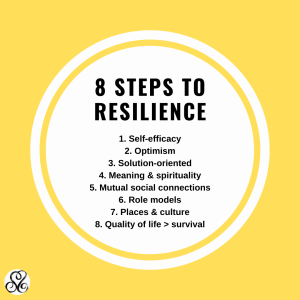
According to the American Psychological Association (2017) there are many ways to increase our resilience.
1. It’s important to actively foster a sense of self-efficacy (remind yourself of what you are able to accomplish, be helpful to others, make small daily steps to reach your goals).
2. Optimism can really help when in a realistic form, and the ability to reframe events that happened to you in a more positive way.
3. When trying to cope with adverse situations, favour a solution-oriented long-term approach, rather than avoidance, which will only postpone the emotional processing while also making it increasingly harder to handle.
4. Channel your sense of meaning, spirituality and purpose (for example through mindfulness, nature, self-care).
5. Cultivate strong social connections and actively seek and give support.
6. For parents: provide protection, empathy and teach coping strategies and a healthy expression of emotions. Role models are a great idea.
7. Cherish your connection with places and stay connected to your culture.
8. In an emergency situation, don’t only prepare indispensable items, but valuable, meaningful ones that increase your quality of life. Remember that you deserve better than barely surviving.
(This list refers specifically to resilience in times of catastrophes, when negative events are not only happening to us, but pervasively affecting society as a whole. These events can be less immediately traumatic than a personal struggle, but become overwhelming long-term and require patience, preparation and the ability to see the bigger picture. During this pandemic, remember to take care of yourself, you connections, your values.)
- Comment
- Reblog
-
Subscribe
Subscribed
Already have a WordPress.com account? Log in now.
 Empatherapy