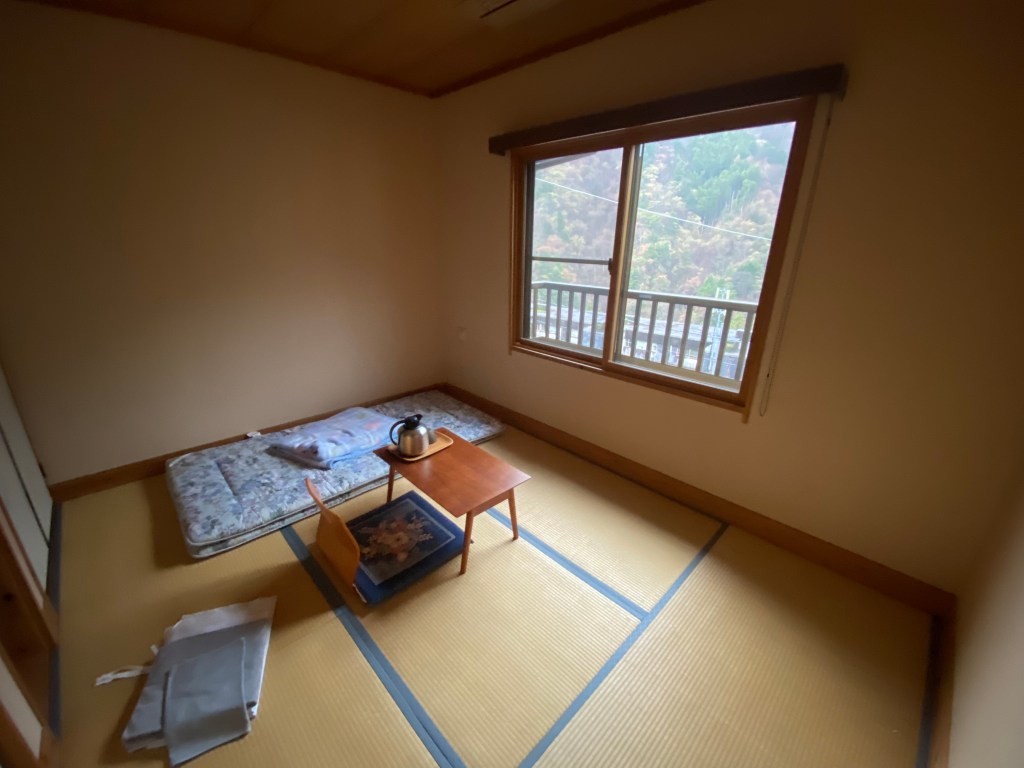
Whether it’s planned or not, I travel alone some times. This time it’s in Japan. Two years ago it was Sevilla. Some years before then, it was a trip to Denmark where I exclusively slept on Flixbusses. It was a silly choice, but you can afford silly choices when you’re twenty-something. I’ve started traveling alone as my inner peace increased, but it took almost this full life to enjoy holidays.
The worst phobias came up while I was traveling. They were always there, obviously, nothing about my trip manufactured fears, but while on “holiday” (which until recent years never felt like the wonderful exception to routine that everyone seems to look forward to) they emerged with such potency that my time away from home often felt like torture rather than an occasion to be grateful for.
I can barely remember the things I saw, my itinerary, the food I ate, but I remember exactly where I was when certain fears hit me. The exact crossing of streets in front of me or the car I was sitting in. You might call them irrational, because anything we’re not facing at that exact moment or that doesn’t have high chances of happening basically is. Some times you are able to predict exactly what will happen although it is not based on any data, just on sensitivity to potential danger. You make a guess and you guessed right. Then you can upgrade those intrusive thoughts to the level of rational worries. I’d like to tell you that satisfaction is worth it but for me it never was.
What a nightmare it was to inhabit my skin during those vacations. A similar but worse nightmare than it usually was. To be fair, in fact, it was hell to be myself a lot of the time back then.
Leaving has been a theme for the longest time. I wanted to leave so bad I asked my parents while in middle school if I could go away for high school. If I could go to that cool place I saw in tv series: the United States. They told me that was excessive (they told me many things I did or said or wanted were) but they promised I could go away for my forth year. I was thrilled. I spent those three years looking forward to it. Then the day came, I was sent to conservative Texas, cried the whole time on that very long flight (which I was about to miss because I had never taken a plane by myself) and had the most miserable year of my life. Not like I wasn’t miserable back home, but I managed to experience a very different flavor of misery: equally tasty.
During that year I accumulated what I’d call now a depressive state, and a firm conviction that I’d die on my way back — I was too eager to leave: something had to go wrong. I was overlooking the fact that everything else was already disastrous, so maybe this one thing would succeed. It did. I managed to land on Italian grounds. All the fears came back with me, luckily my parents had brought extra luggage.
I left many more times. And looking back, none of them were happy moments. In Rome I found some peace, but also some more torment.
It became easier to leave as I grew and healed, but it was always tough. On so many school trips I had symptoms of things I still can’t put a name on. Yet, I kept doing it even if it was miserable. Leaving was more important. There’s that song that says that running away is easy, but leaving is hard. I was running away more than leaving. Escaping gave some relief when contemplated, but the place I ran towards quickly became just another place to run away from. And leaving, for a holiday, was almost unbearable. Choosing to go, with the idea of coming back, as an exercise of movement and exploration. Excruciating.
You know about attachment, right? How they found out some of us are secure and others are not. You can be secure in just one way, but insecure in many. It all has to do with how you deal with departures: Can you leave? Can you say goodbye, then come back? Can you trust others will come back after they leave?
Leaving, as BADBADNOTGOOD said, is very hard. It’s hard when you have no place to leave from (which is somewhere to come back to). When the people who raised you taught you to be suspicious of others’ presence, their ability to stay, their desire to come back, you become a child who learns to either be nonchalant, barely noticing when they’re left alone, or you become agitated, constantly wary of signs that might imply being left. When you’ll learn to move your legs, you’ll run away, or you’ll never even walk to the other room. You’ll have eyes in the back of your head, to check if home is still there, if someone’s looking out the window.
During this holiday, I had a flashback. I have traveled solo before the most recents trips, how could I forget? How did I not think of the first real trip I planned that included no one but me? It was so obvious. Ten years ago, I bought a ticket to Amsterdam, decided to spend the summer in Utrecht by myself.
Ironically enough, I never came back.
I had to go far enough to find a place I miss when I leave, but I’m sure is still there when I return.
 Empatherapy