While not necessarily being a DIY person, I am very much of a DIY professional. I learned how to make a basic website, I asked for no advice for the logo, the name, my presence on social media. I have patiently drawn on my iPad to craft a title for my workshop, I have taken selfies with the right background to make “professional photos” and used my own pictures to accompany my Substack posts. I have also decided to hang a sticker on my window — if you were wondering, yes, it’s crooked — and draw an alien next to it.
Besides being financially convenient, all of this entrepreneurship was an attempt to have ownership over each aspect of my professional expression. As a result, it all looked very homemade, but it was all very much my style. I was intimately connected to all of that clumsiness, and it allowed me to avoid that awful moment when someone makes something for you and you find yourself unable to say: “this really doesn’t look like me”. Aren’t we all familiar with looking in the mirror after a failed haircut and telling the hairdresser: “yes, that’s exactly what I wanted” with a smile that’s covered in tears?
My logo is essentially the first homemade thing connected to Empatherapy, and I’ll tell you what it is now. But first, look at it and tell me — the imaginary me that wrote what you’re reading and is now speaking to you — what it is for you. Let it be a small Rorschach test: what do you see in the ink spot?
When I started seeing clients it was nerve wracking at first. Am I ready to be someone else’s psychologist? How dare I think I can help people? What will I say? What will I do if there’s a long silence? What if I miss something important? What if I’m as lost as they are?
So, before the session, I doodled. Endless pages of one symbol repeated over and over and over and over.
It was this one:
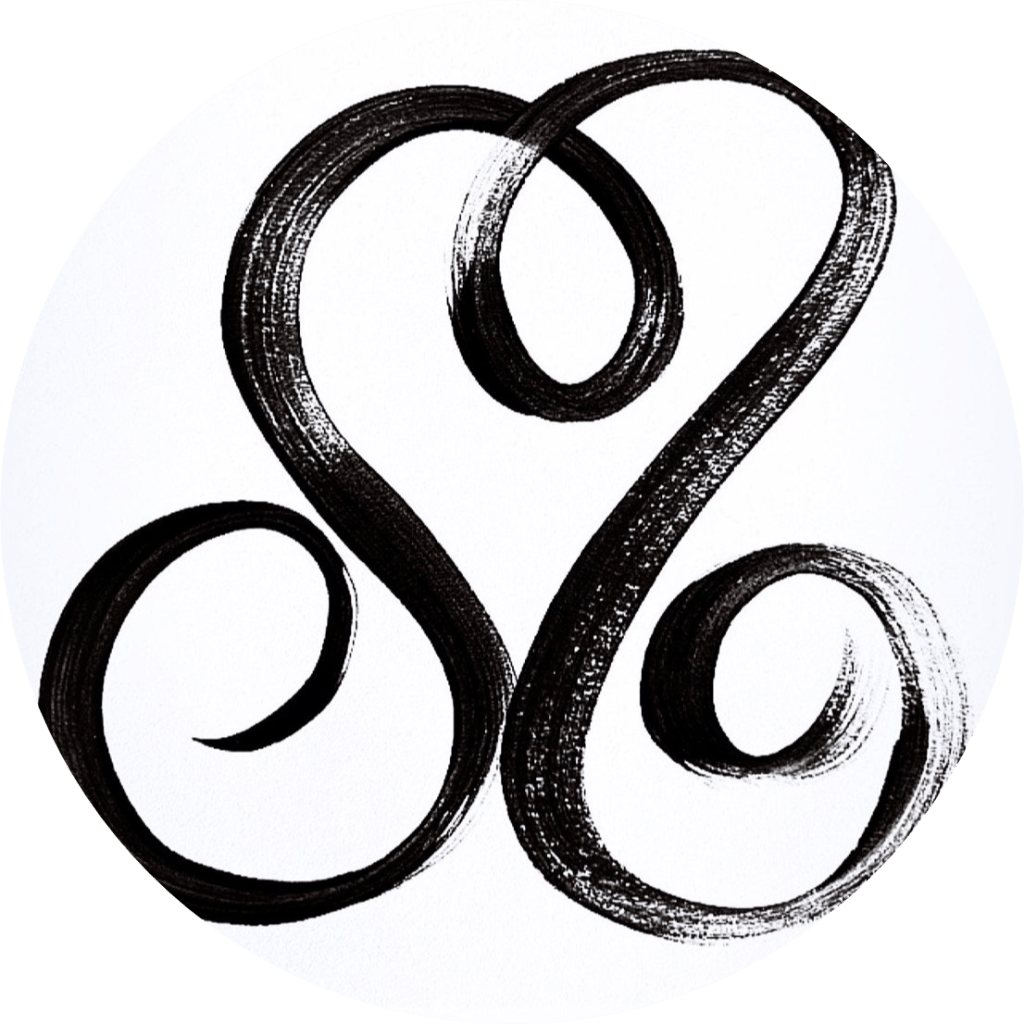
If it looks handmade it’s because it is handmade.
Only recently I drew over it and made it more compact
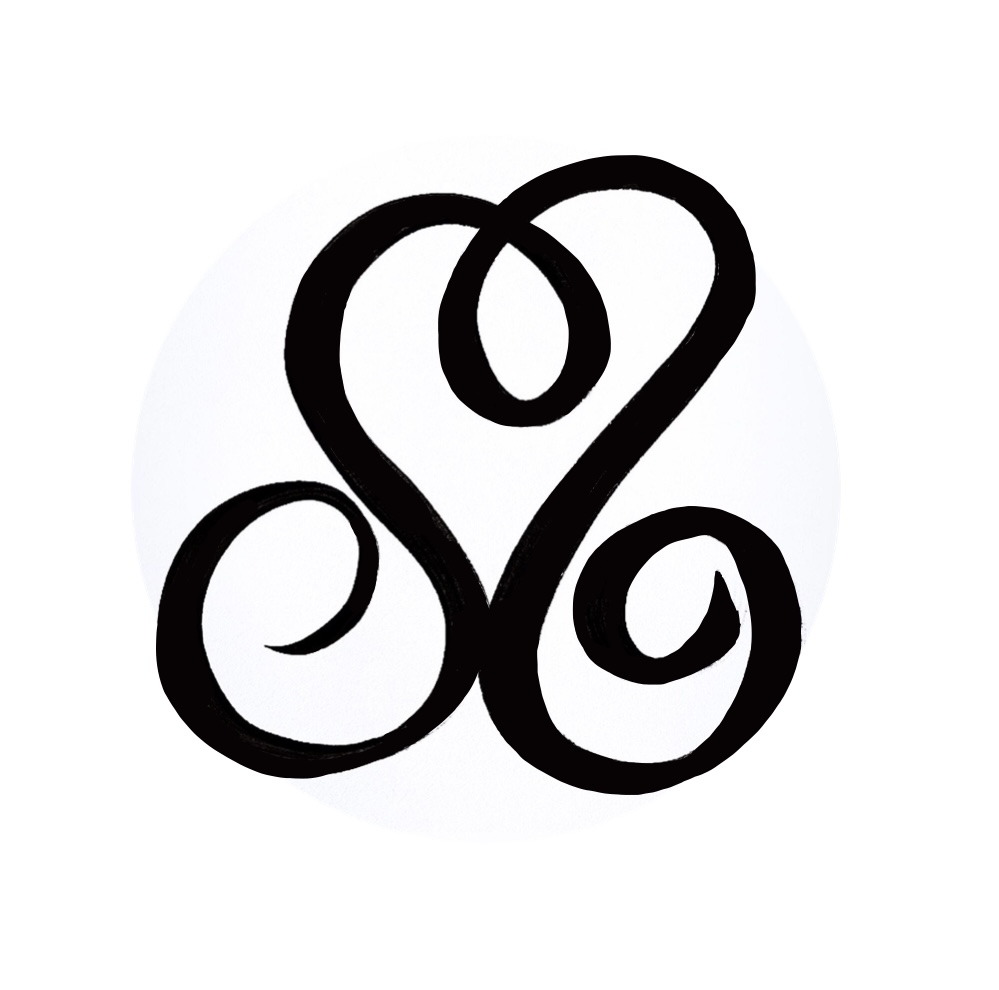
but it’s basically the same thing.
To me it expressed the underlying humility I wanted to keep all along: shying in front of another human being, not being the expert, knowing humanity touches us and makes us nervous, emotional, vulnerable. Especially if we are psychologists.
The beauty of letting the hand go and draw is like the beauty of improv. As you let something take over you allow other Yous to visit, and inhabit you. You allow them the recognition of having always been there, when you had no words or symbols for them — hence, you had no idea they existed.
Now this symbol embraces more truths than it ever did and less than it ever will.
Being one and double, being single and dual, reaching out and drawing in, trying to replicate symmetry and failing, letting edges come together, being crossed by a thread that creates shapes.
Would it be cheesy to think past me was telling future me what the themes of my work would be? Would it be too Frankensteinian to imagine my fingers knowing more than my brain?
Would it be crazy to invite you to abandon meaning as you know it and embrace some chaos in how things speak to you?
Yes.
Yes.
Yes.
Now what?
 Empatherapy